
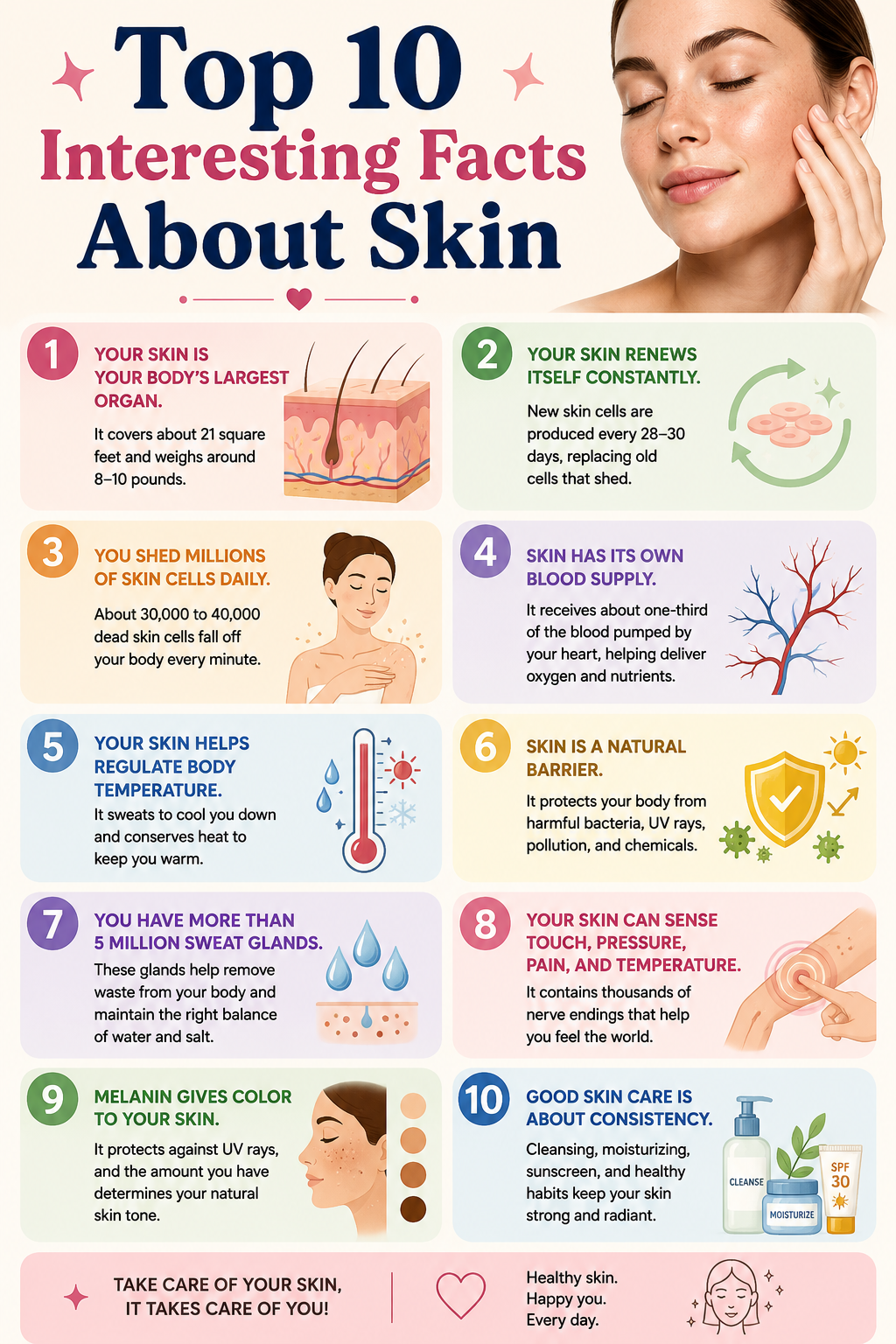
The skin is comprised of three layers: the epidermis and dermis and subcutaneous tissue. The three layers are able to protect the body and promote the health of our bodies. The epidermis forms the outer layer that protects the external environment. Dermis is a structural layer that provides support by supplying collagen and elastin. Lastly, the subcutaneous layer encapsulates as well as cushions your body. Understanding these layers reveals the Top 10 Interesting Facts About Skin and its intricate details.
Skin Health and Its Importance
Skin health is crucial to a healthy lifestyle. It guards against infection as well as regulates temperature, and gives sensory information. A healthy skin requires nutrition, hydration, also sun safety. A good skin care routine can maintain healthy skin and help prevent premature aging and diseases. These aspects are essential in knowing the Top 10 Interesting Facts About Skin and its essential function within our daily lives.
Skin is Multifunctional
It’s more than just a shield It’s also multi-functional. The shield absorbs Vitamin D derived from sunlight, which aids in the development of bones. It is also used to convey emotional states, the blushing of example. It also has receptors that enable us to feel the sensation of touch, temperature, and pain. These functions are among the Top 10 Interesting Facts About Skin which demonstrate its many functional role and significance.
Here is a list of the Top 10 Interesting Facts About Skin
| Interesting Skin Fact | Why It’s Interesting |
| Skin functions as the body’s biggest organ | It protects and covers the entire body. |
| Human skin is composed of three layers. | Each layer is a specialized protector with specific features |
| Skin is constantly renewed | The new skin cells are replaced by older ones frequently |
| Skin helps produce Vitamin D | The light of the sun triggers an important health-related function |
| Skin has thousands of receptors for sensory stimulation | Allows for the use of touch, pain and temperature detection |
| Collagen helps maintain skin structure | It helps to maintain elasticity and firmness. |
| The skin regulates temperature | Through sweating and control of blood flow |
| Fingerprints are created through skin patterning | Each person has their own unique print |
| Skin is a way to show emotions | Pallor and blushing reflect reactions |
| Skin functions as a barrier to pathogens | Essential for overall general |
Effective Skin Care Practices
The practice of good skin care is vital for healthy skin. Regular cleansing, moisturizing as well as sun-protection are crucial. Skin care regimens that are customized can address issues such as dry and acne-prone skin. Utilizing natural products can boost the condition of skin without causing irritation. These techniques are compatible with the Top 10 Interesting Facts About Skin and highlight the importance of nourishing the skin to ensure its health.
FAQs
Q1. What are the principal layers of skin?
The answer:The skin is made from the epidermis dermis and subcutaneous layers. They play a variety of functions, such as protection, insulation and support.
Q2. What is the role of skin protection for the body?
Answer:The skin protects the body by acting as a barrier against pathogens, aiding in maintaining the body’s temperature and also preventing dehydration. It also lets us feel and generate vitamin D.
Q3. What are the most effective practices to take care of your skin?
Analyse:Cleansing, moisturising and sun protection are excellent ways to maintain your skin. Natural ingredients and customized skin care help maintain the health of your skin